

Why the Right Bottle Cap Closure is Crucial for Product Integrity
- steve foldesi
- Nov 14, 2025
- 10 min read
Updated: Dec 5, 2025
Consider a moment and glance at the top of your preferred product, a bottle of high quality juice, a jar of special coffee, the container of pharmaceutical pills. Majority of the populace never consider it second. It’s just a cap, right? It prevents the contents of spilling till you are ready to use them.
However, in case you believe that the bottle top, the top, is a mere accessory, then you are missing the whole story. When it comes to the world of packaging, the closure will not be a lid, it will be the final protector of the product. It is the last, most important, barrier against an unmerciful world of oxygen, moisture, contaminants and time itself.
In the case of brands, the integrity of a product, and the image created around it is placed squarely on this tiny and frequently-ignored bit of plastic or metal. Cases of failure when closing down even in the sub-way can be disastrous: wasted stock, expensive recalls, sanctions by the authorities, and worst of all, the loss of consumer confidence that could not be recovered.
The path towards having a perfect seal is not an easy one. It is a complex operation, which involves special materials, engineering and accurate automation. This is where comes the invisible complexity of Closure Lining, Slitting and cutting-edge Closure Lining and Slitting Technology.
The Unsung Hero: Getting to know the Closure System
In order to appreciate the essentiality of the right closure, we would first have to see that it is not the monolithic piece. The bottle closure is a complete system, being made up of the outer shell (which is the cap itself) and, most importantly, a highly engineered internal part: the Closure Lining.
The high-density polyethylene (HDPE), polypropylene (PP), or metal outer shell is the one that gives the container the physical barrier and threading required to fit into the container. Nevertheless, plastics and metals do not make good seals on their own. The points of contact between the bottle lip and the cap tend to have microscopic gaps or it may flex due to fluctuations of temperature and pressure.
Here the Closure Lining (or liner, or wad) comes in. The liner is a thin disk of material, such as foam, foil or a special film composite, which is inserted into the cap. As the cap gets screwed onto the container, this liner gets compressed, and fits against the slightest of bumps to the rim of the bottle. The real airtight seal is formed by this mechanical compression.
The work of the liner varies radically with the product that it is protecting. A liner should be capable of withstanding pressure of carbonation in a beer bottle. A motor oil bottle must have a resistant liner to degradation by chemicals. A supplement jar also needs a liner that would guarantee a shelf life of many years against humidity. Selection of the appropriate material and the guarantee of its perfect installation with the use of the accurate procedures of machine lining are the two aspects of the product integrity that cannot be contested.

The Essential Roadblock: Why Closure Lining is a Non-Negotiable
The cap depends on the quality and location of its internal Closure Lining to be successful or a failure. It serves as the environmental shield of the product to fulfill multiple functions which are essential at the same time:
Leakage and Spillage Prevention: This is the most the most evident role. The correct seating of the liner will ensure that the liquids, powders or granules will remain in their place and not to cause mess or loss of products during transit and storage.
Maintaining Freshness (Shelf Life): With food, beverage and pharmaceutical products, this is the most valuable role. Liners provide a barrier of oxygen and moisture. In the absence of the barrier, products such as juice are oxidized, vitamins are destroyed and processed foods are deprived of their structure and taste. High Closure Lining materials like induction heat seals actually bond a protective layer onto the lip of the bottle and gives a quantifiable increase in shelf life.
Chemical and Solvent Resistance: The contents of the industrial, cleaning, and cosmetic products can be corrosive. The liner also helps to attack the plastic or metal of the cap itself by the volatile components. The failure to select the liner material may fail disastrously, dissolve, or contaminate the product.
Such degree of accuracy is not possible with manual methods. Modern manufacturing is characterized by uniformity and quickness which necessitates advanced automation. This is the area of machine lining technology, in which automated systems lay and fix liners with a high-level of precision, that of the microscopic level. The special machinery applied in the process of lining machine closures make sure that each individual liner is cut to the precise size, positioned in the center, and fitted or glued to the place correctly in the cap shell before the machine assembly process is finally finished. Any scratch, tear, or dislocation that is created at this point affects the seal prior to the cap coming in contact with the product bottle.
The Safety Feature: Art of Closure Slitting Technology
The integrity of the product does not just involve keeping the products fresh, it encompasses consumer safety and confidence. A new cap closure needs to promise the customer that he is the first individual to open the product. An assurance provided by tamper-evident band and it is an art of perfection engineering provided by Closure Lining and Slitting Technology.
The initial step in slitting is a thin line that is perforated and carefully sliced at the bottom of the skirt of the bottle top. This is the tamper-evident band made up of this perforated line. When the consumer turns the top, the seal cuts along this perforated line clean and the broken ring of plastic is left to the neck of the bottle - a definite indication that the product is opened.
This process which is controlled through machine slitting is critical in its accuracy. In the event that the cut is excessively deep, the cap may break too soon or be completely removed on the way to the location. When the cut is too shallow, the consumer will find it hard to break the cap open thus leading to an unpleasant experience of destroying the product. A bad cut may cut out of shape and the user will be forced to use a tool which may cause damage to the product or even the bottle neck itself which may subsequently lead to the future integrity of the product once opened.
Closure Lining and Slitting is the right words to define the two-way functionality of high end cap manufacturing equipment. It accepts that the internal seal (lining) and the outer safety measure (slitting) should be completed in speedy succession. Currently, the sophisticated Closure Lining and Slitting Technology employs high speed rotary blades or lasers, directed by sophisticated algorithms, to produce thousands of precision cuts in one hour simultaneously cutting the liner in the cap, producing a complete functional and safe final machine closure.
Automation the automation imperative: A, component to final product
The whole closing process, handling of raw materials up to final seal preparation is a race against microscopic margins. The quality of a brand is directly associated with the technology a brand employs. The capitalization on the machine closure systems of the state-of-the-art is not a luxury, but an operational necessity based on integrity.
High-end automation has a number of key benefits which directly affect the quality of final seal:
1. Constant Pressure and Positioning
The force to insert the liner or make the slit may not be consistent as a result of manual processes or outdated processes. The current machine lining devices use servo-driven mechanisms that provide the precise and programmed pressure each time so that the liner can be seated flat and without flaws. This is because this uniform pressure on millions of caps will guarantee the seal to be the same on the first bottle of the product as it is on the final bottle.
2. Speed Meets Accuracy
The large quantity of products being sealed nowadays require unbelievable speed. The issue is to keep the accuracy at nanometer level and act in such blistering speeds. The lining slitting equipment is special purpose machine that is geared towards coordinating the liner insertion with the slitting process as a single system. Such integration avoids the errors of transfers and reduces the time, which the components of the cap spend in the manufacturing environment, which additionally preserves the integrity of the material of the liner and of the cap itself.
3. Waste Reduction and Material Handling
The level of efficiency of Modern Closure Lining and Slitting Technology is also very high. These machines save a lot of materials wastage as they require precision and cutting as well as location of the Closure Lining material. Minimized errors during slitting process implies that the number of discarded caps is minimal. The efficiency is essential in ensuring that there is high throughput and reducing the environmental impact of the packaging process. These automated systems are highly reliable, meaning that the machine that is eventually closed is not only of high quality but also cheap to manufacture in bulk.
The Ripple Effect: the Failure of Bottle Cap Closure Integrity
When people are missing something, it is sometimes easy to tell how important it is. When the right closure does not take place, the outcomes get out of hand:
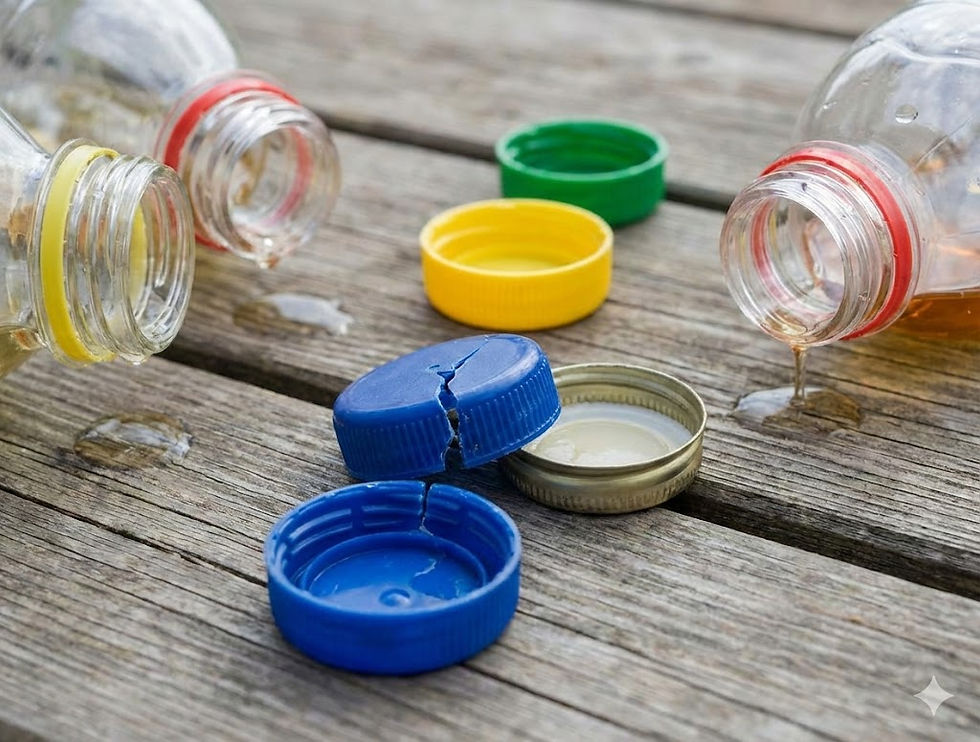
Product Degradation: An oxygen in leaky or misaligned liner. This causes early spoilage, depletion of carbon or chemical degradation. To a consumer who purchases a product out of the assurance of quality, each time he receives a stale or a flat product, it is a direct attack on the brand relationship.
Safety Risk: In case of pharmaceuticals or sterile medical supplies, a failure of Closure Lining may bring in contaminants, which will make the product hazardous. This is literally life and death in these sensitive industries and hence the reliability of the machine assembly equipment as well as the machine lining equipment is a controlled requirement.
Financial and Brand Damage: The price of a large-scale recall because of a weakened closure may amount in the millions of dollars, including logistics, disposal, and fines. Nevertheless, the non-financial price of a ruined brand reputation the one that once required decades to create and ruin in minutes is even larger in many cases. The image of a product that burst or was too easily opened may have a long-term impact with only one viral video.
Finally, the decision on which cap is chosen and what accuracy Closure Lining and Slitting Technology to use to make this choice is a risk management decision. Firms that believe in high automation and solid machine lining slitting systems are not only purchasing machines but purchasing confidence, the confidence that their merchandise, having crossed continents and months on a shelf, will be precisely what the customer anticipates it would be once he/she actually twists the cap.
The ultimate Word on Closure Excellence
The little unobtrusive bottle cap has a monumental task. It is the last handshake between the promise of quality by a brand and the product offered by the brand to the consumer.
The attainment of a seal that ensures the product integrity at the production line up to the point of utilization is a complicated ballet between material science and mechanical accuracy. It is the process that involves the combination of the advanced capabilities of machine lining and machine slitting so as to create a dependable machine closure.
The moral of the story is to never put down the scuttles. In the case of manufacturers who consider excellence as their priority, the expenditure on the innovative Closure Lining and Slitting Technology is a vivid testimony to their devotion to the integrity of the products. It makes sure that the protector of the product is as perfectly made as the goods in it. Selecting the appropriate machinery is to secure your product, your customers and your future.
FAQs
1: Why is the Closure System Considered the "First Line of Defense" for Product Integrity and Shelf Life?
The most pervasive inquiry in packaging development centers on the fundamental justification for the engineering resources dedicated to closure systems. While the primary function of "keeping the liquid inside" is obvious, the engineering reality is far more nuanced. The closure is the critical barrier that defines the product's environment from the moment of bottling until the moment of consumption.
2: How Do I Select the Correct Liner Type for My Specific Application?
The second most critical area of inquiry involves the liner—the material inside the cap that actually makes contact with the bottle's "land area" (the rim). While the cap supplies the mechanical force, it is the liner that provides the seal. Choosing the wrong liner is a leading cause of package failure, chemical incompatibility, and leakage.
3: What Causes Torque Decay and "Back-Off" During Shipping and Storage?
A frequent source of frustration for manufacturers is the phenomenon where caps are applied to the correct specification at the factory but arrive loose at the customer's location. This is known as torque decay or "back-off," and understanding it requires a dive into the physics of thermoplastics.
4: Why Do Bottles Leak Even When the Cap Seems Tight? (Root Cause Analysis)
Leakage is the most visible and damaging failure mode. When a manufacturer asserts "the cap was tight," but the product still leaks, the issue usually lies in dimensional mismatch, application geometry, or invisible defects rather than simple looseness.
5: What is Environmental Stress Crack Resistance (ESCR) and Why Does It Matter for Carbonated Beverages?
For producers of Carbonated Soft Drinks (CSD), the internal pressure of the bottle creates a unique stress profile that demands specialized materials. This leads to the critical concept of Environmental Stress Crack Resistance (ESCR).
6: How Does Induction Sealing Work and What Are the Common Failure Modes?
Induction sealing is a complex thermodynamic process dependent on three critical variables: Heat, Pressure, and Time. A failure in any one of these parameters results in a compromised seal.
7: What Are the Regulatory Standards for Child-Resistant and Tamper-Evident Packaging?
Safety regulations dictate the design of closures for pharmaceuticals, chemicals, and household toxins. Compliance is not optional; it is a federal mandate in the US and EU, enforced to protect public health.
8: How is Container Closure Integrity (CCI) Tested in a Lab Setting?
Visual inspection is no longer sufficient for high-stakes packaging. The industry has moved toward deterministic, quantitative test methods to ensure Container Closure Integrity (CCI).
9: How Do Chemical Compatibility and "Aggressive" Products Influence Closure Selection?
Not all liners can hold all liquids. Chemical incompatibility leads to liner degradation, swelling, and eventual leakage, a principle summarized as "like dissolves like."
10: What Are the Emerging Trends in Sustainability and "Tethered" Caps?
The future of closures is being dictated by environmental regulation and the push for a circular economy, forcing manufacturers to innovate rapidly.


Comments